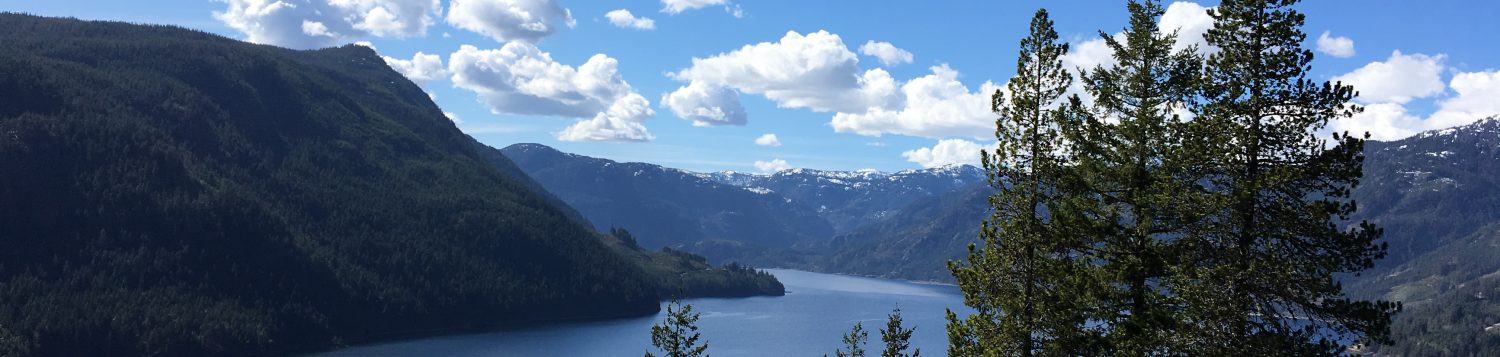


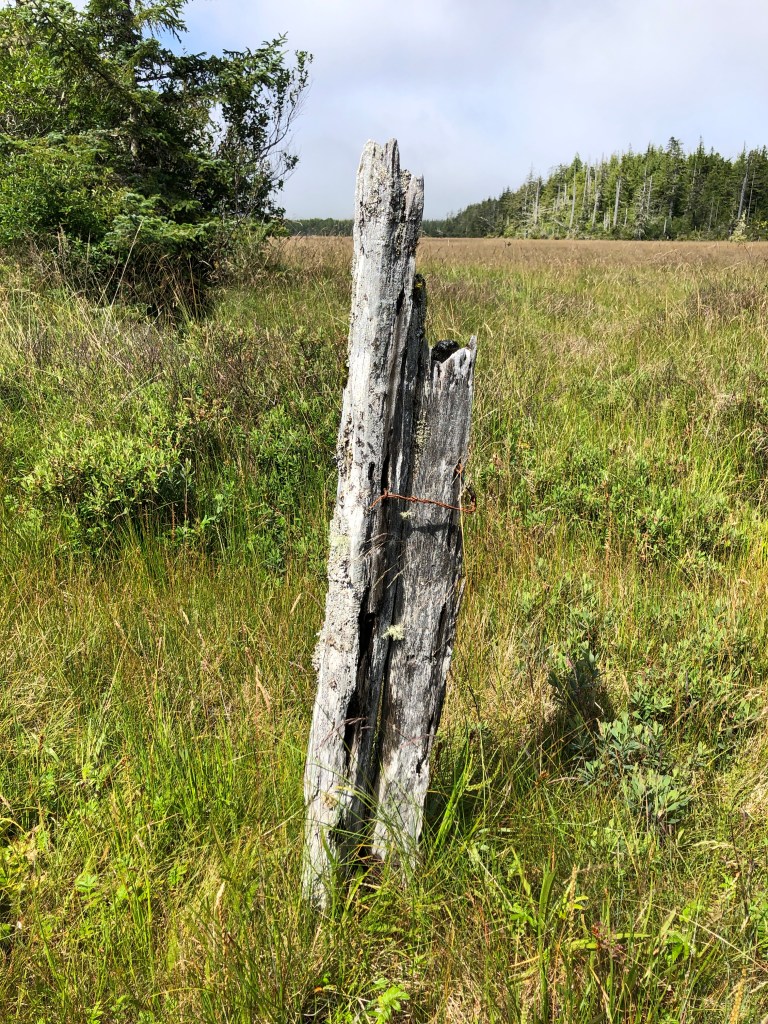
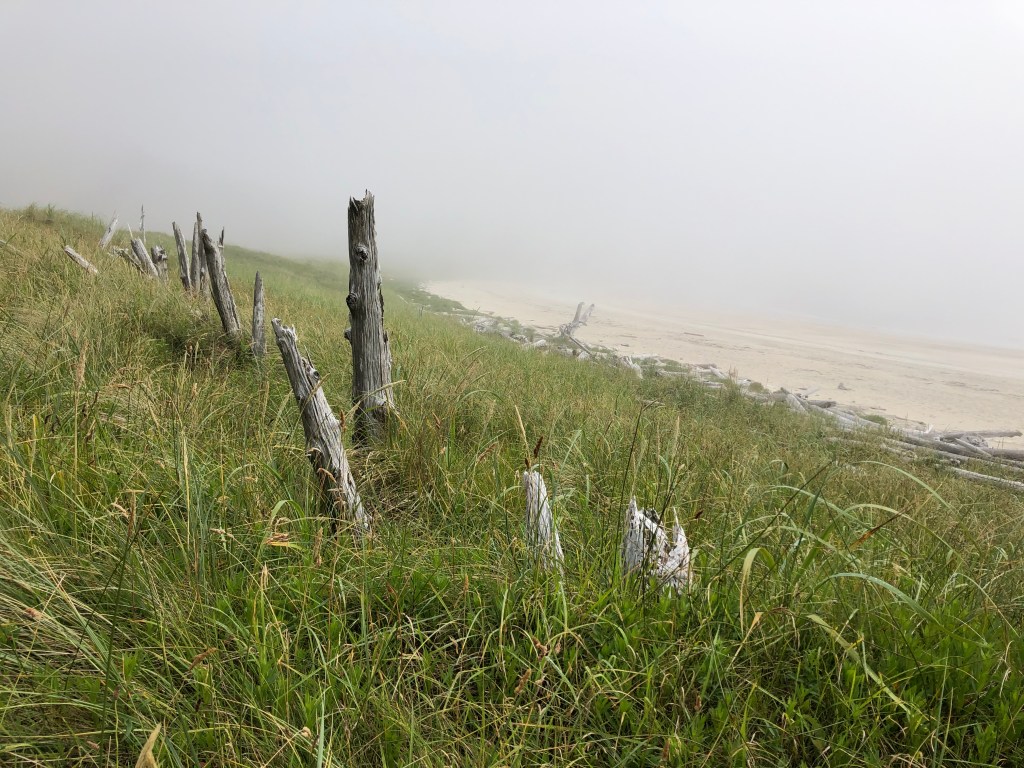
In the late 1800s and early 1900s Canada actively promoted immigration and development. In 1894, Rasmus Hansen, a Danish fisherman, arrived on his fishing boat in what is now Hansen Lagoon on the northwest tip of Vancouver Island, BC. He encountered vast meadows and salmon-bearing streams and foresaw the potential for farming and fishing. Together with Chris Jensen, Peter Thomsen, and Nels Nelson, Hansen negotiated a settlement agreement with the government and organized a group of Danish pioneers to colonize the area. From 1896-1907 approximately 100 Danish settlers attempted to establish a self-governing farming and fishing community at Fisherman Bay in what is now Cape Scott Provincial Park. They produced high quality dairy products and produce, but poor transportation to markets made farming economically challenging. In time, the provincial government withdrew their land lease and the promise of a road to the isolated community, resulting in many settlers abandoning their farms to seek work elsewhere. At Hansen Lagoon, rotting fence posts in the meadows are one of the few reminders of this farming history.
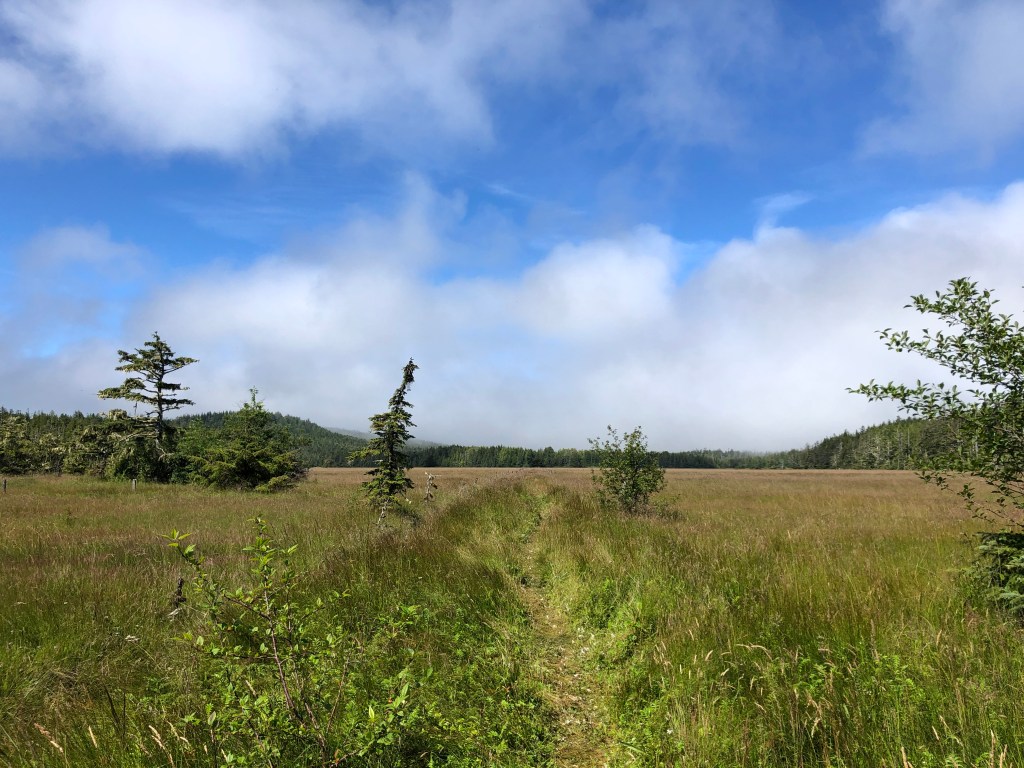
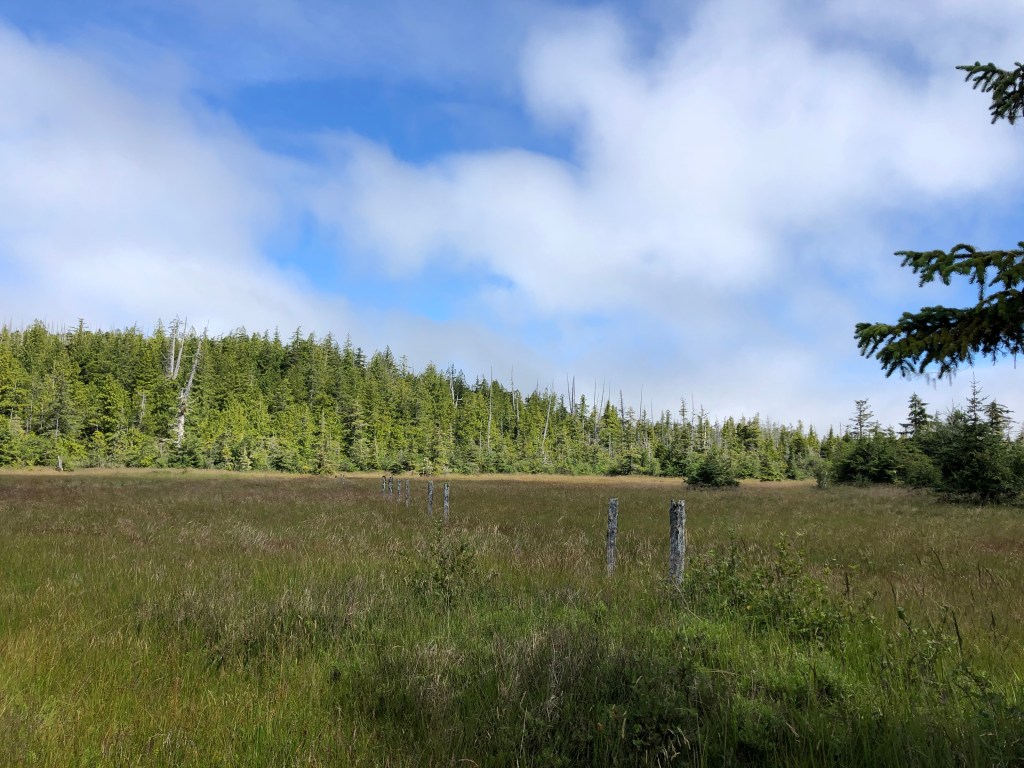
In 1899-1900, the Danish settlers built a 7-foot-high dyke across Hansen Lagoon to convert a tidal flat to agricultural land. After a year of construction, a fierce storm combined with high tides destroyed the dyke on the day it was completed. A few years later a second, more robust dyke was constructed, but by the time it was finished the Danish colony was already disbanding.
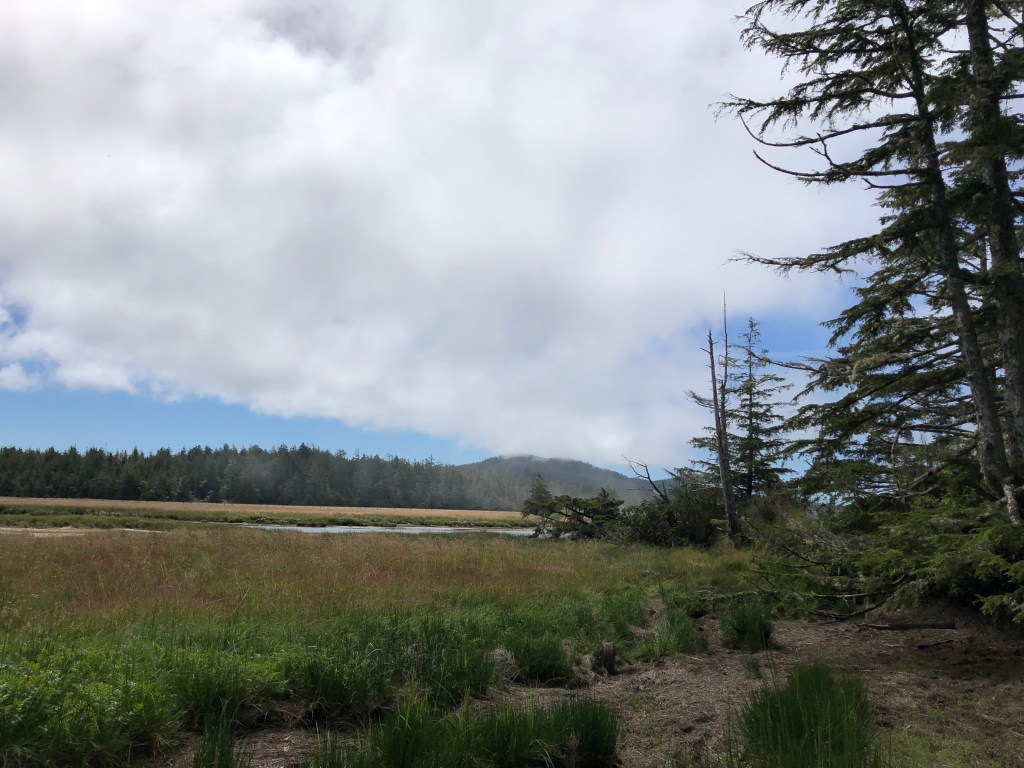
A second attempt to settle the area was made. The provincial government opened the land to a wider cultural mix, including Europeans, eastern Canadians, and Americans from Washington State. By 1912 more than 600 people were homesteading in the Cape Scott area, mainly in the Hansen Lagoon area. A community hall with a classroom was built and at one time up to 30 children of different nationalities attended school there. The community was strong and had dances, annual fairs, and general meetings at the community hall. However, the problems that had earlier plagued the Danish settlers remained: poor transportation and communication services, stormy weather, and difficulty earning income. By 1917 most of the settlers had left the area, leaving behind whatever they could not easily pack out, including farm tools, buildings, stoves, machinery, and vehicles.
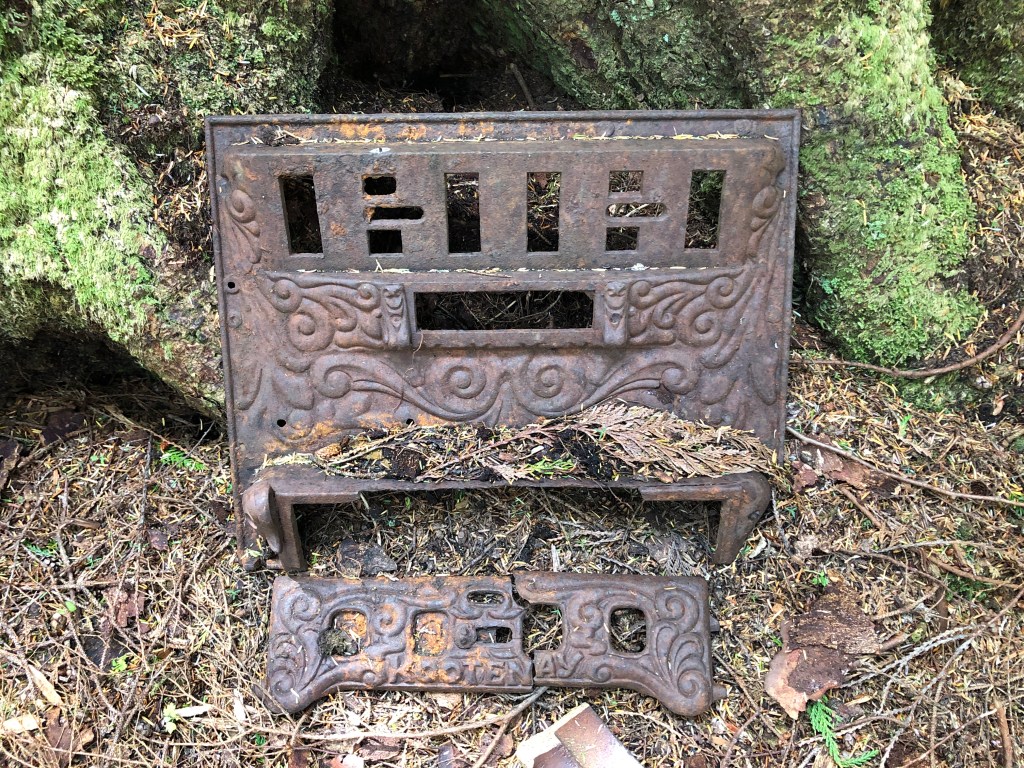

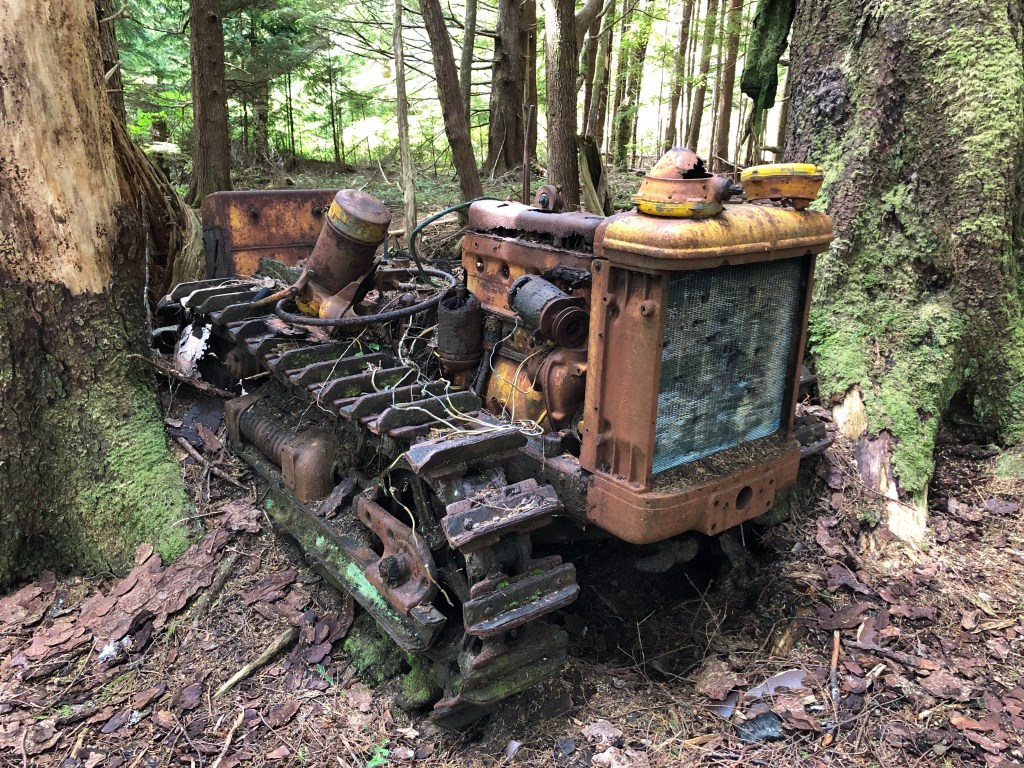
Other remnants of these two periods of early settlement remain. A neck of sand connects the expansive white sand beaches of Guise Bay and Experiment Bight. In 1910 N.P. Jensen constructed a driftwood fence and planted clover to stabilize the sand dunes for pasture. The clover and parts of the fence remain. Remnants of a 1908 corduroy road heads south from Eric Lake towards San Josef Bay. the bleached posts and dangling wire of a telegraph line built in 1913 can be seen in some of the open spaces. An old Caterpillar tractor sits in the forest.
Historical information from BC Parks
 I Wonder and Wander
Thanks for the information and photos. My great-grandfather, Carl Brink Christensen was one of those early settlers and was the justice of the peace and school teacher at the colony. I believe there is a monument there for one of my grandfather Ivor’s stepbrothers William Christensen. My daughter and I plan to walk the trail there before I get to old 🙂 John Christensen
LikeLiked by 1 person
Hello John. I love that you have that personal historical connection to Cape Scott. I definitely recommend that you and your daughter walk the trail – it is a fantastic experience and it will have so much extra meaning for you. My mother is Danish so I feel some connection but you have that direct link. We saw the monument for William Christensen. I don’t have a photo of it but I saw one in this blog post: https://happiestoutdoors.ca/cape-scott-trail/.
LikeLike
Came across your post by accident. I have always been interested in the Cape Scott colony. My father arrived in Port Alice in 1932 and hiked to Cape Scott along with two other friends. For the most part they managed to stay with people who still lived in the area. He kept quite a good diary with names and places he stopped at. Most interesting was his visit with the Fredericksen family at Guise Bay. He took pictures of the family as well as inside the home.
I made contact with one of the Fredericksen daughters Ellen, around 1990, who lived on Saltspring Island at the time. She actually remembered Dad’s trip to their home in 1936. An interesting side note, she told me her sister, Clara Hersley I did a lot of research at the Dept. of Lands and Forests an discovered original signed documents of the original Danish Settlers. John, your Great Grandfather’s land was Township 43, Section 14, the Northwest Quarter his signature was on the document he signed in 1899.
I feel privileged to be emailing a direct descendant of the original colony
WordPress.com / Gravatar.com credentials can be used.
LikeLiked by 1 person
Another connection to the Cape Scott settlement! Thanks for sharing this, Bill. It must have been interesting talking to Ellen Fredericksen.
LikeLiked by 1 person
Thank you for posting the story. I am a daughter of Ellen Fredricksen and have hiked to Cape Scott twice, once with my sister and brother and then again with other family members. We were able to find our great-grandfather, N.P. Jensen’s grave and restored the fencing. I would recommend the trip to anyone having ancestors. Living there was a big part of my grandfather’s (Theo Fredricksen) life and their family was one of the last to leave.
LikeLiked by 2 people
Hello,
My Welsh Grandparents Daniel Lewis Williams and Sarah Morgan Williams had a preemption in Cape Scott as part of the second settlement. I have a picture of where they settled on a map of Cape Scott that is in the Quatsino Museum, but I do not have the legal description. I am quite curious about what you were able to find out from the Department of Lands… perhaps I will be as lucky if I further research through them the exact location of the preemption they left behind that later became the Fredrickson Property… or so I was told at the Museum in Quatsino. Thank you for your post… so interesting!
LikeLiked by 1 person
My great grandfather Hans Olsen was a settler at Cape Scott!
LikeLiked by 1 person
So many interesting connections people have to Cape Scott!
LikeLike
Hello! I have just learned from my father that my family was part of the colony!! Chris Jensen was my great-great-grandfather!!!! I will be planning a visit for sure!!
LikeLike
That’s exciting to find you have that family connection. It’s such a beautiful place. I hope you make it up there soon.
LikeLike
Hi – I’ve just discovered your Cape Scott history and wonderful photos. As a Vancouver Islander now living in Tasmania, I travelled out to the cape several times in the 1980s and 90s.
My writer’s group down here is currently preparing a Word/Art exhibition at a local gallery and I have decided to use the Cape Scott story as one of my themes. The presentation of the text is as important as the written content. I’ve lost many of my original photos (slides) and am wondering whether I might “borrow” two or three of yours. Of course, credit would be given, and the display broken up at the end of the exhibition.
We are a small (population 5000) rural town in north west Tasmania, but in an area of considerable natural beauty.
I’d be truly grateful for permission to use your images.
Sincerely,
Mervyn Mitchell
Wynyard, Tasmania
mkmitch@outlook.com.au
LikeLike
Thank you for your note. I responded to you by email.
LikeLike
The CAT tractor and some of the road and building remains probably date from WWII when the Canadian and US Militarys operated a radar station with a 70 man camp in the Cape Scott area.
See: https://www.101nisquadron.org/wwiiair-surveillance/cape-scott-ru/
This area is a wonderful place to visit. The hike is not hard and, during the summer months into the early fall, the weather can be relatively nice. The rest of the year?… well apparently that is why no one but lighthouse keepers live up there.
LikeLike