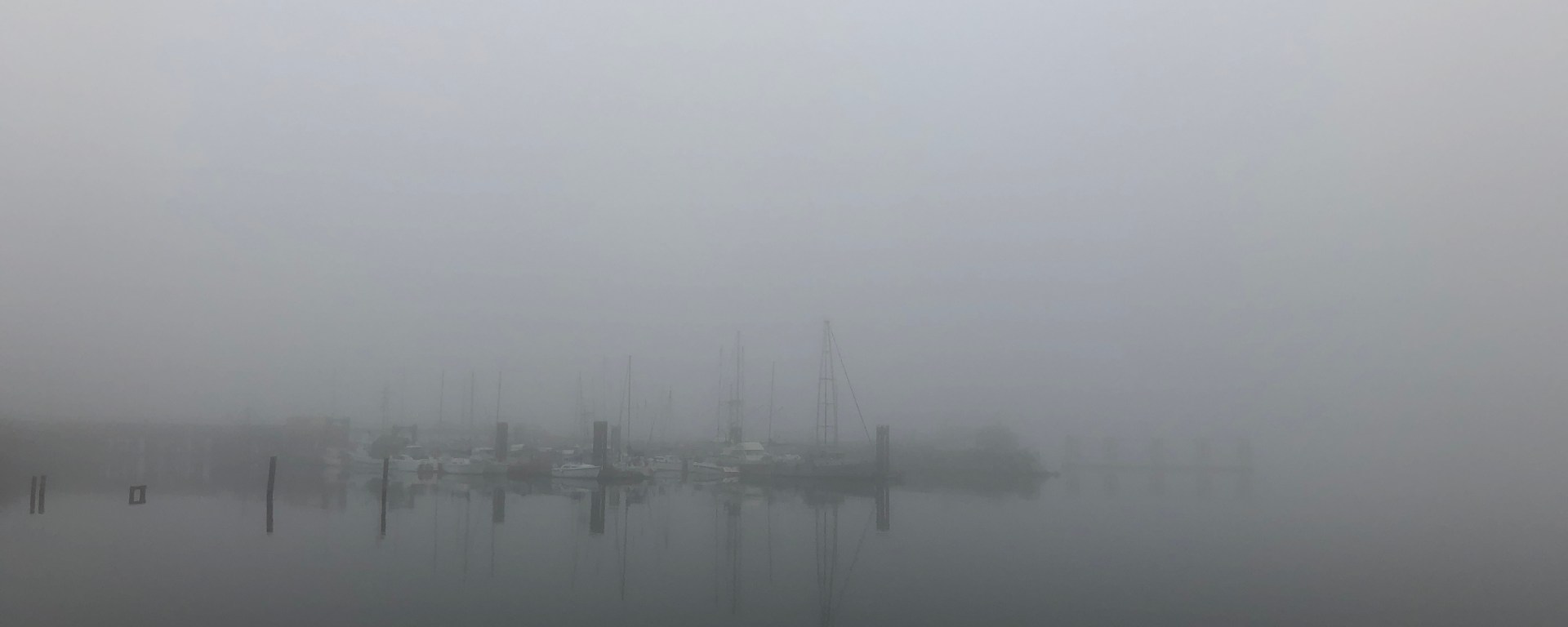

Mine was the third car in line. I had arrived an hour early for the 8:55am ferry from Crofton to Vesuvius Bay the first weekend in October. After a 2-hour drive my legs were aching to stretch and I discovered a boardwalk along the shore next to the terminal.
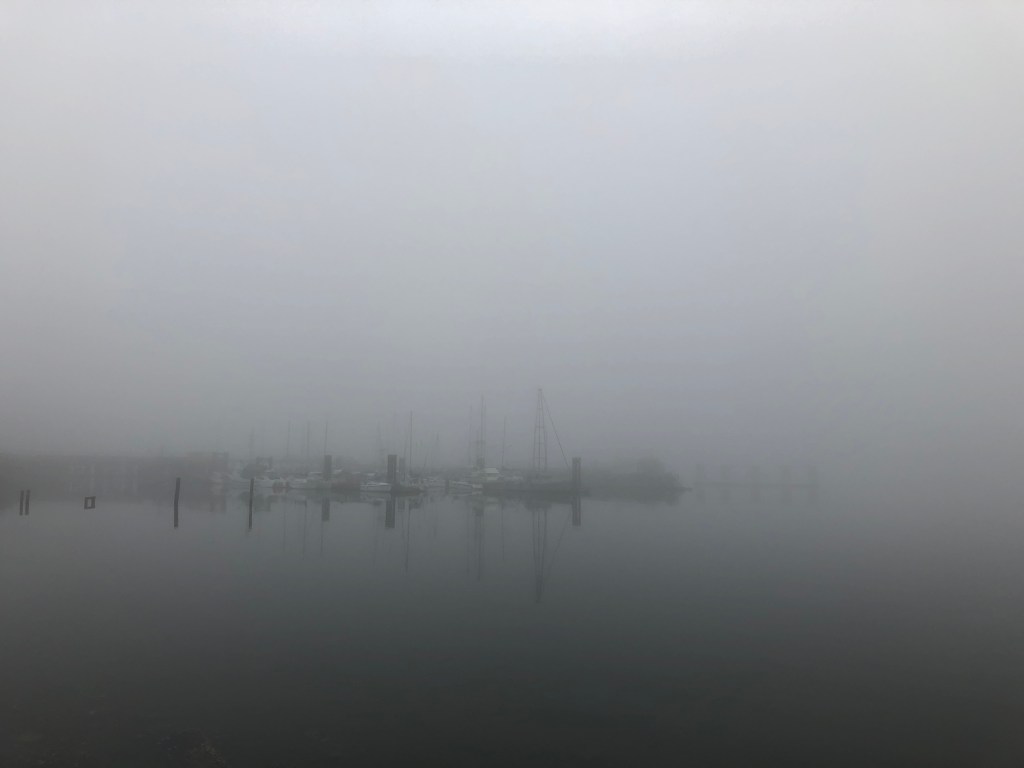
Looking seaward, I could not distinguish the horizon due to the dense fog; water and sky were minor variations of the same grey, the colour gently lightening as I raised my eyes towards the hidden sun.
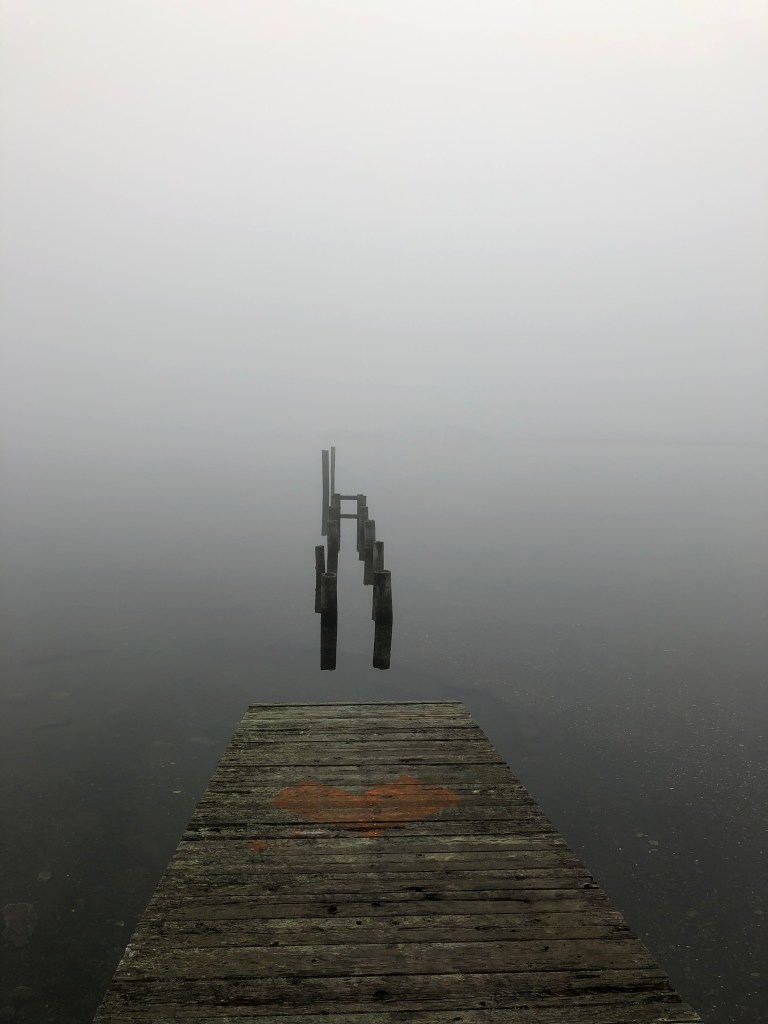
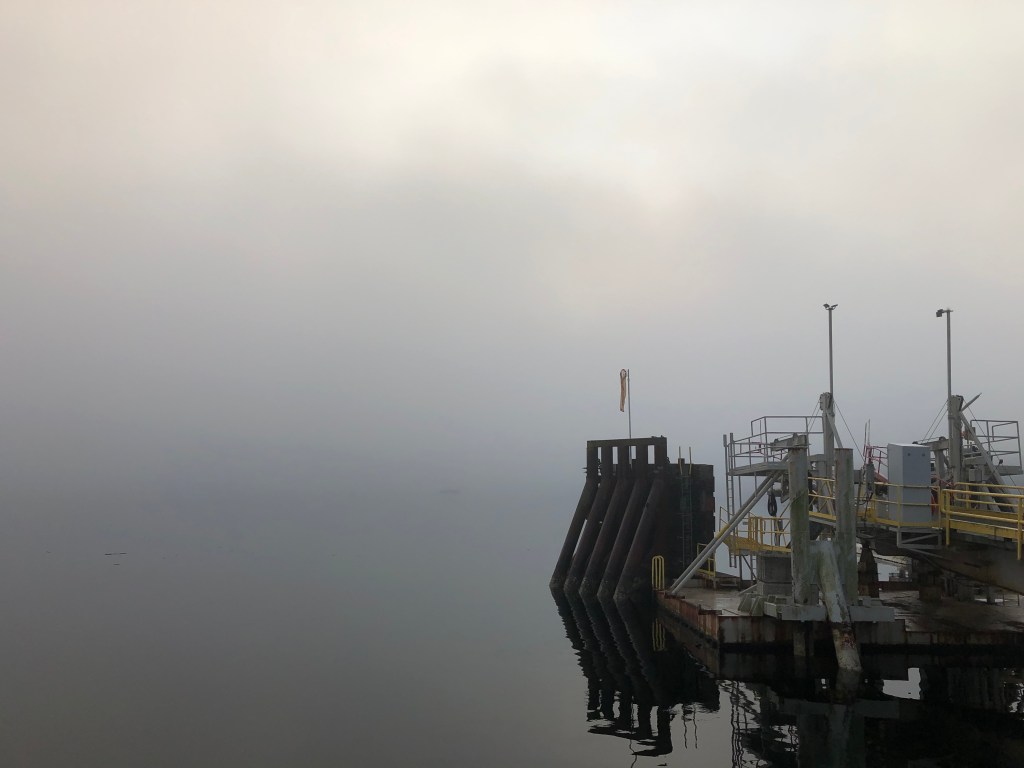
The boardwalk overlooked an aging wooden dock, perpendicular to the shore, its weathered boards splintering and rotting. Beyond the dock stood the remnants of a wharf: ten decaying tree trunk pilings holding up the ombre sky. The water was so flat and motionless it was impossible to tell where the posts ended and their reflection began. Beneath the water I could see rocks and shells on the muddy floor of the shallow bay, and I inhaled the odour of seaweed rotting in the eelgrass at the high-water mark.
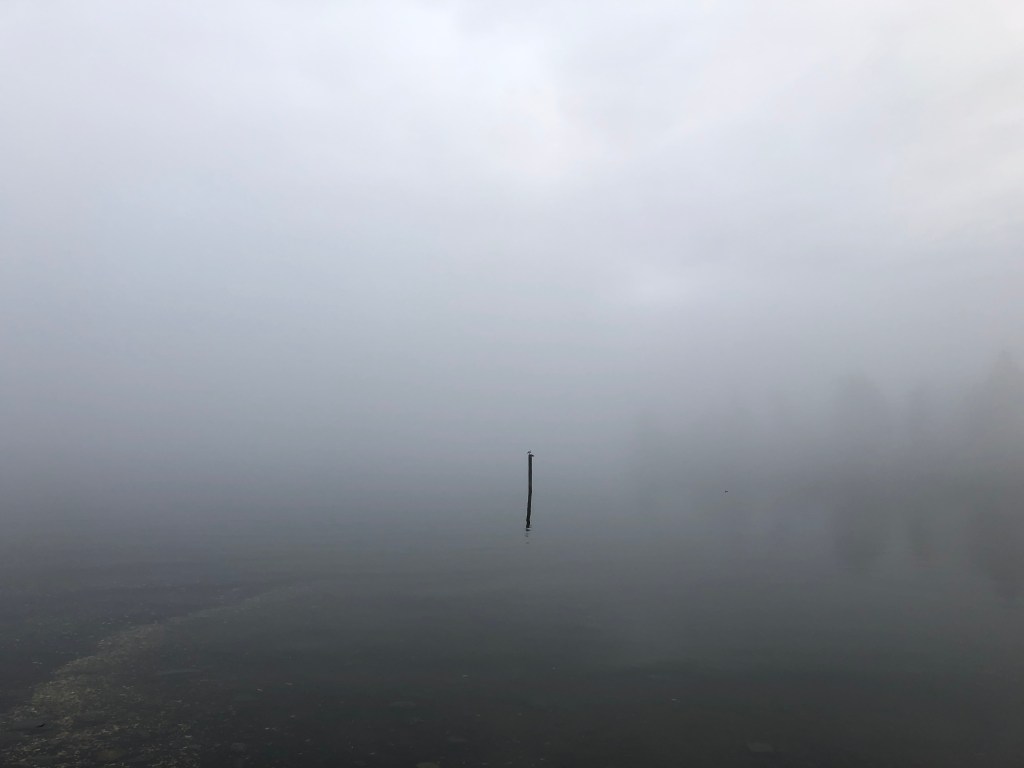
Wafting through the mist I heard a girl’s laughter. I sensed the direction of her voice, but could not see the boat in which she was sailing. Every five minutes the ferry horn blasted through the fog to warn nearby boaters, its volume gradually increasing as the vessel approached the terminal.
Returning to the queue of vehicles waiting to embark, I wandered over to the red and white boom gate blocking vehicles from loading. Brightly painted yellow guardrails on either side of the wharf stood out from the steely grey enveloping the scene, and the railings stretched towards the raised loading ramp directly ahead. With the incoming vessel still sheltered by fog, we appeared ready to board a ferry to nowhere.
 I Wonder and Wander