
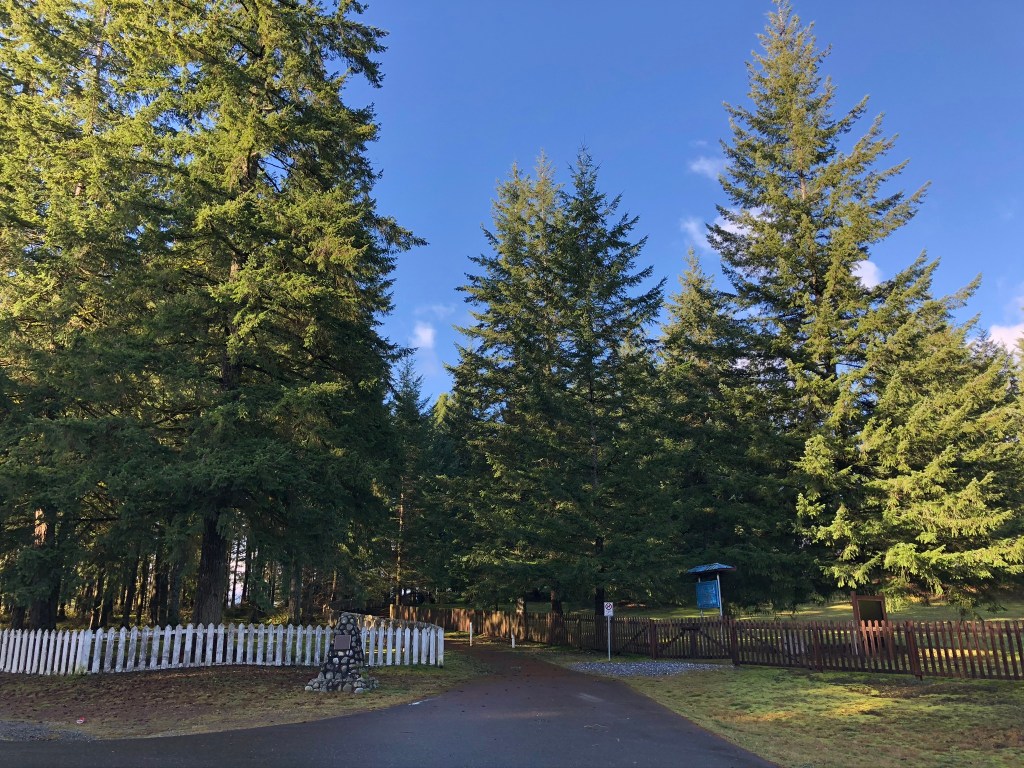
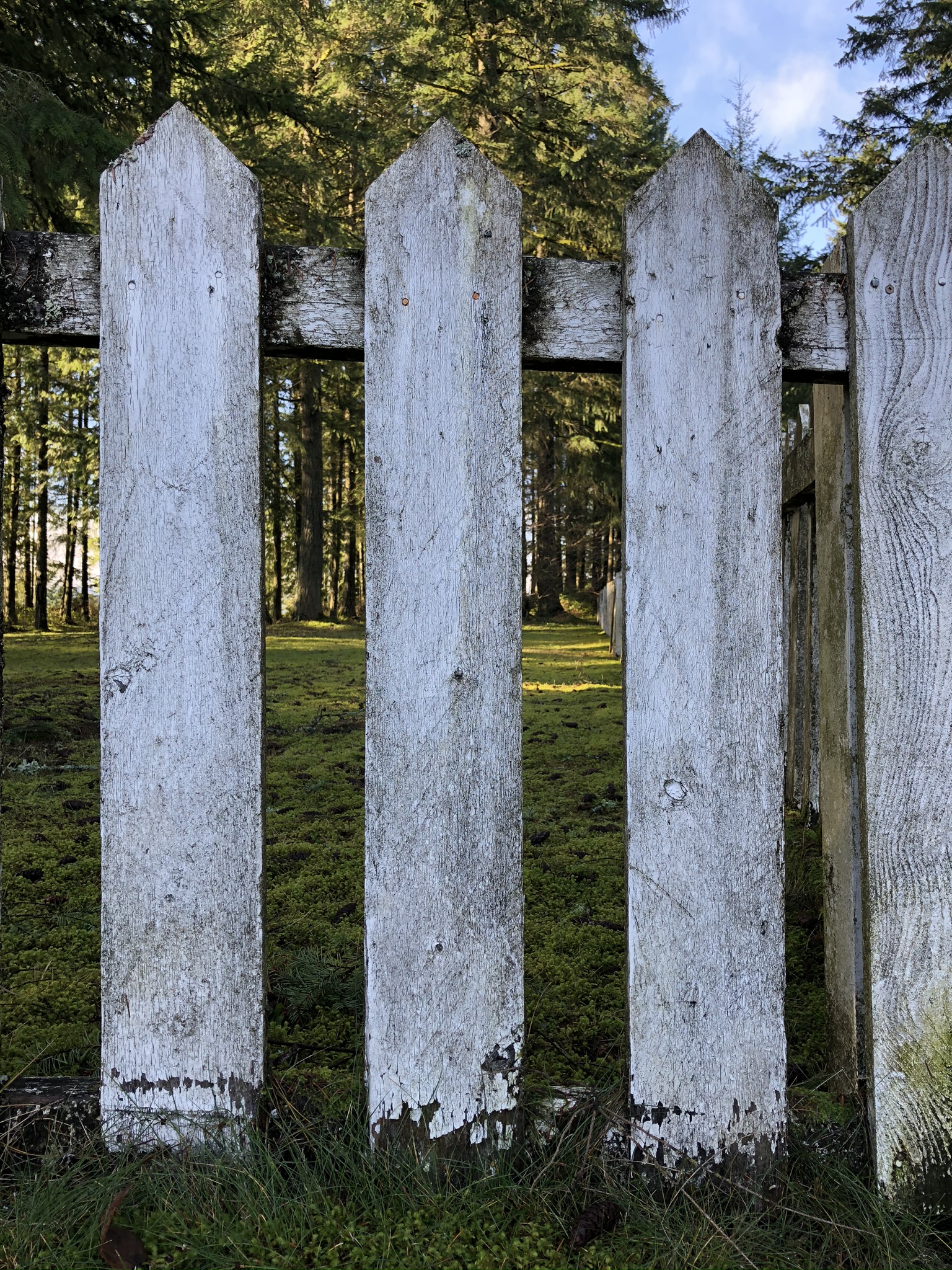
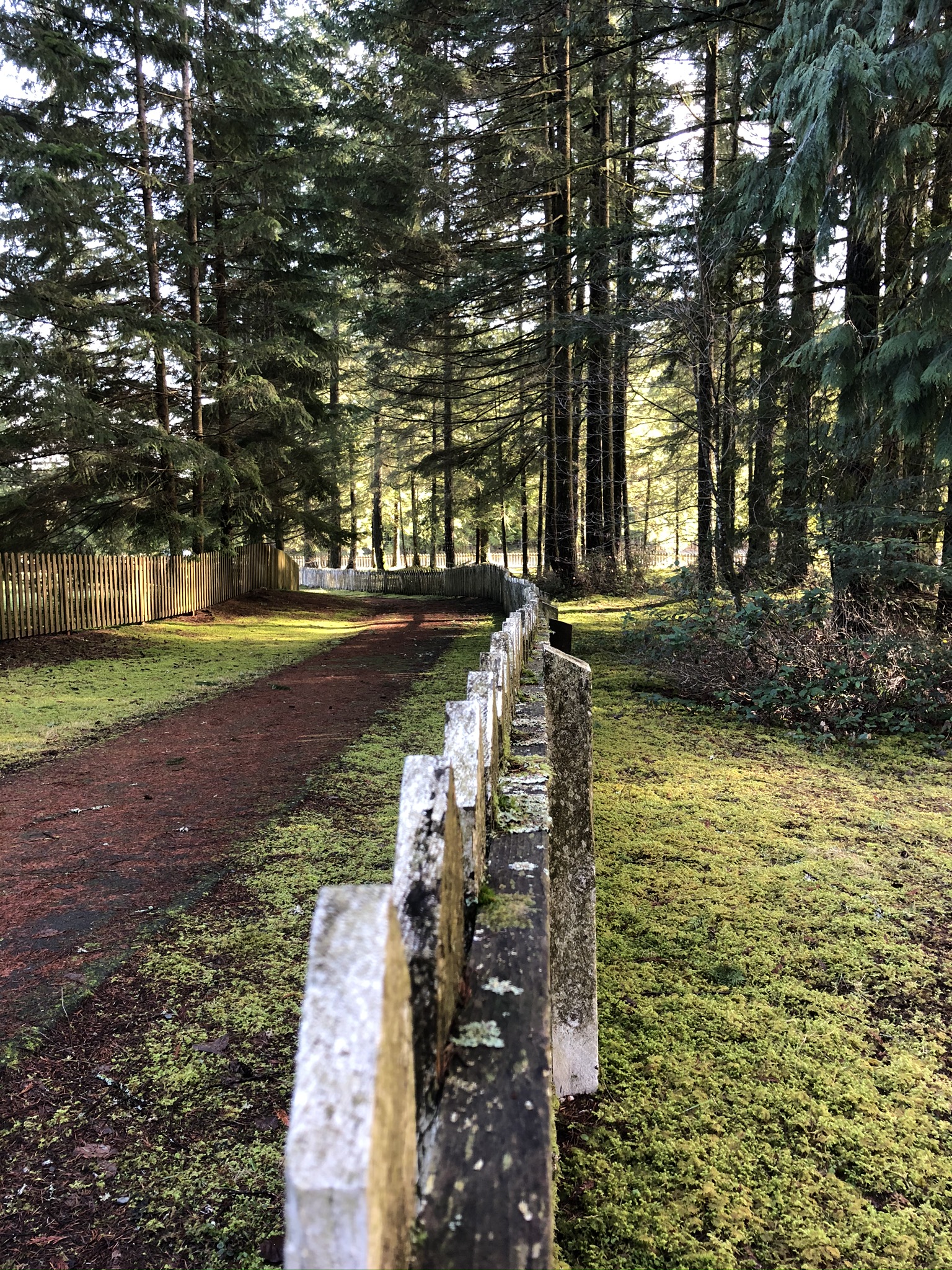
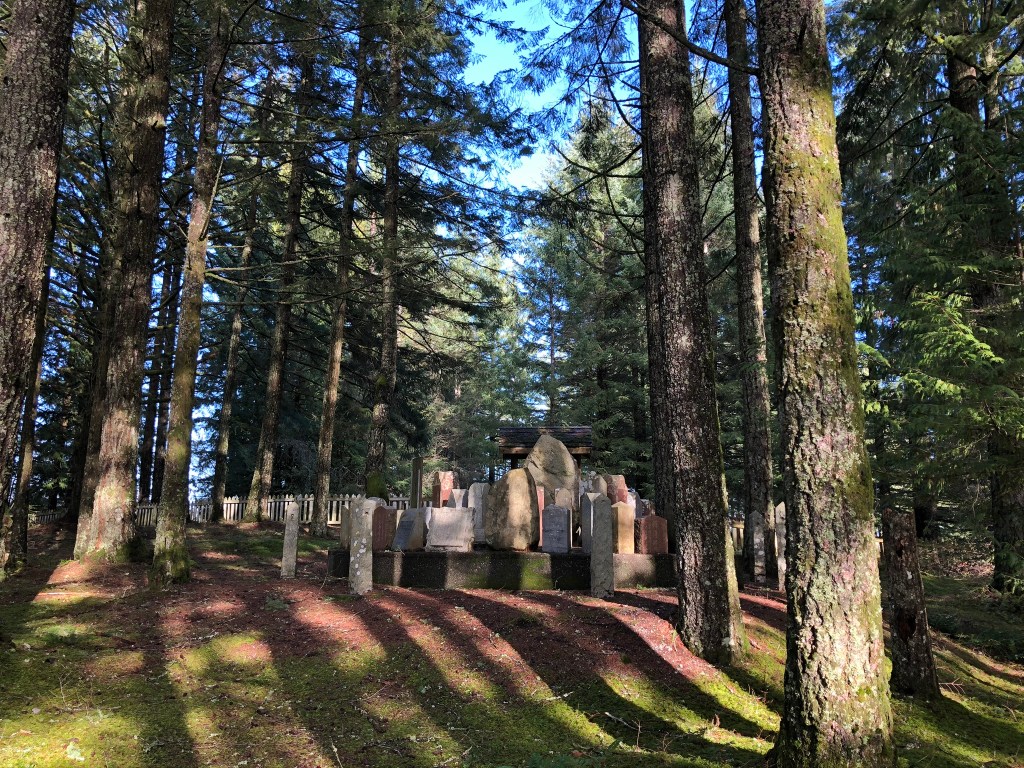
Bordered by a weathered white picket fence, a curved sloping path to the Cumberland Japanese Cemetery invites me in. Towering Douglas firs cast extended shadows and sunrays peek between the boughs, cutting through the chill and warming my face. A raven lets out a guttural croak and I inhale the post-rainstorm air. The path is littered with debris from last night’s storm: small fir boughs, spindly branches, and masses of reddish-brown fir needles sculpted into drifts by rivers of rain. Behind me cars and semitrucks roar past on the highway, yet this place feels peaceful and insulated.
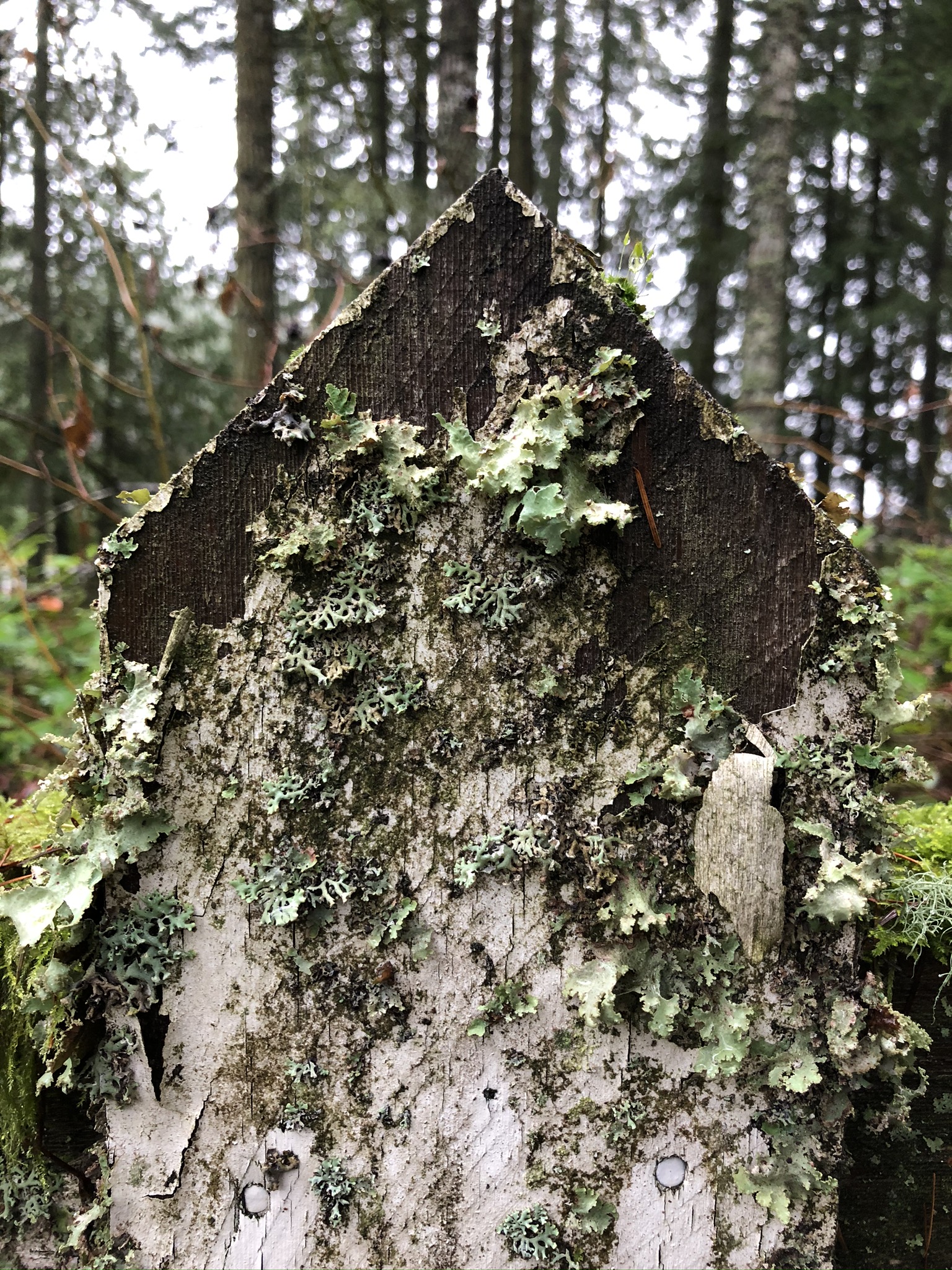
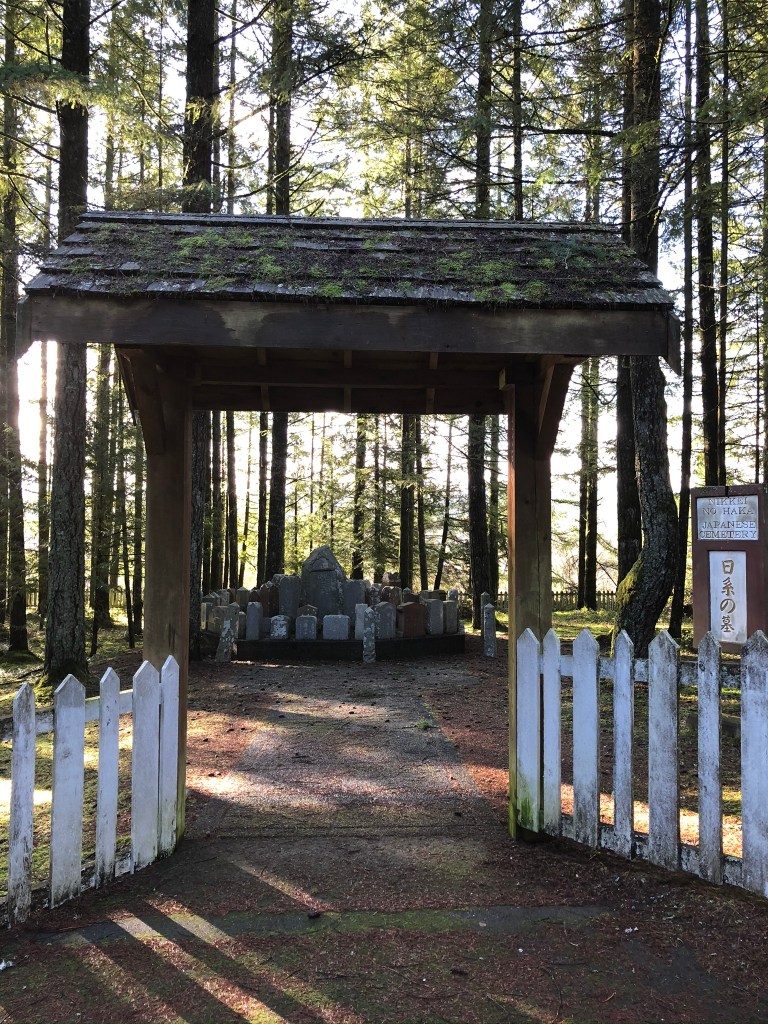
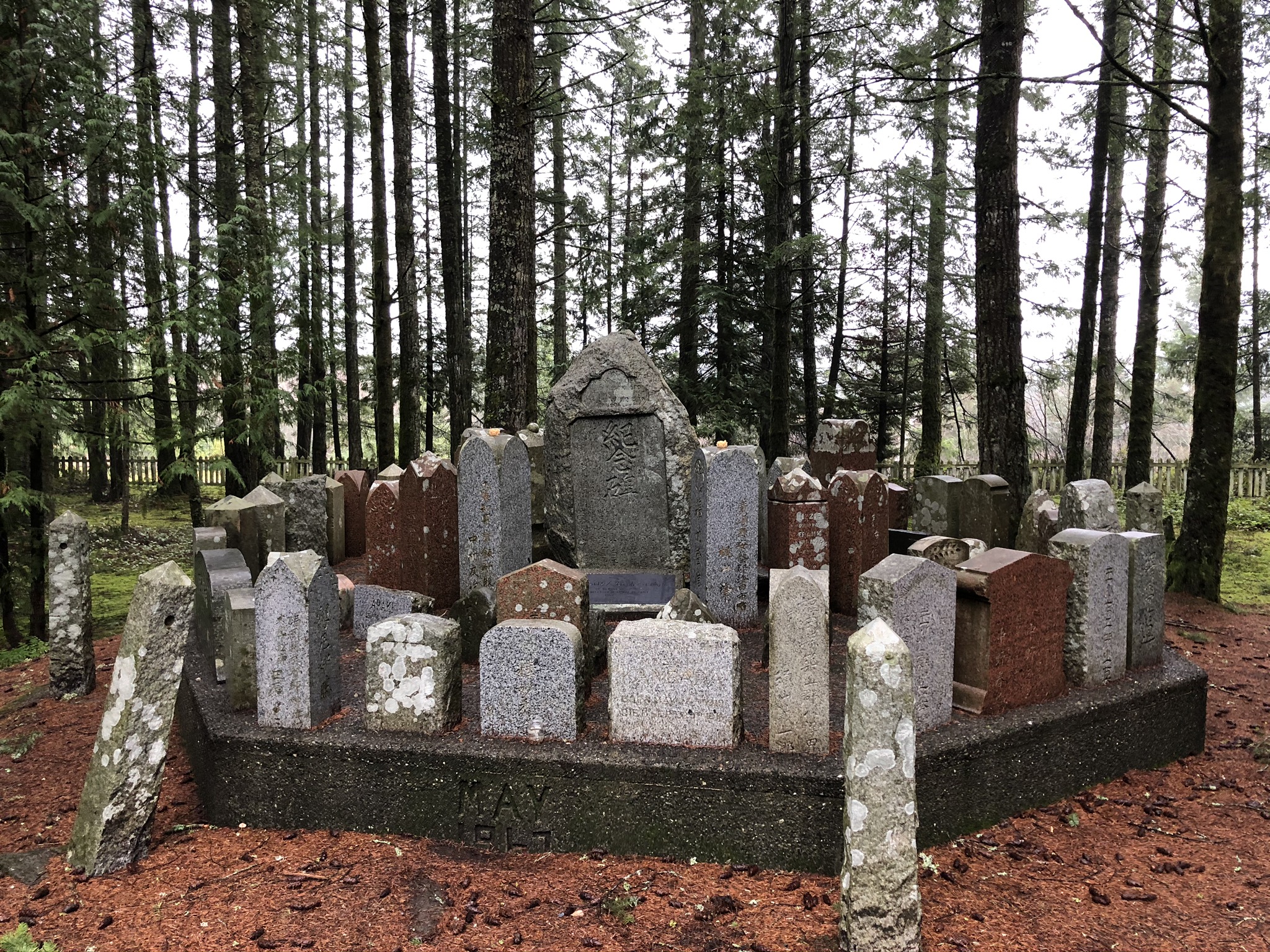
A wooden entrance arch frames the raised octagonal altar of recovered gravestones created by volunteers in 1967. Some are polished angular pillars, the inscriptions in Japanese or English sharp and clean. Others are natural stones, faded and coated in moss. Many of the families are long forgotten, having scattered after the war. Tucked between two stones rests a yellow lotus-shaped candle, its blackened wick drowned in rainwater. Despite the devastation, I feel the sacredness of this place.


The first Japanese miners arrived in Cumberland in 1891 and established the No.1 Japanese Townsite. The community flourished with families, gardens, temples, businesses, and even a Japanese school. Japanese residents were an integral part of the community until the enactment of the War Measures Act in 1942, when Cumberland’s 31 Japanese families were ordered to leave and placed in internment camps, mostly in the interior of British Columbia. The federal government confiscated their possessions and property. After the Second World War ended, the internees were forbidden to return to the coast, and most of Cumberland’s Japanese former residents dispersed and settled in other provinces. Anti-Japanese sentiment lingered and the cemetery was desecrated by vandals in the 1940s.
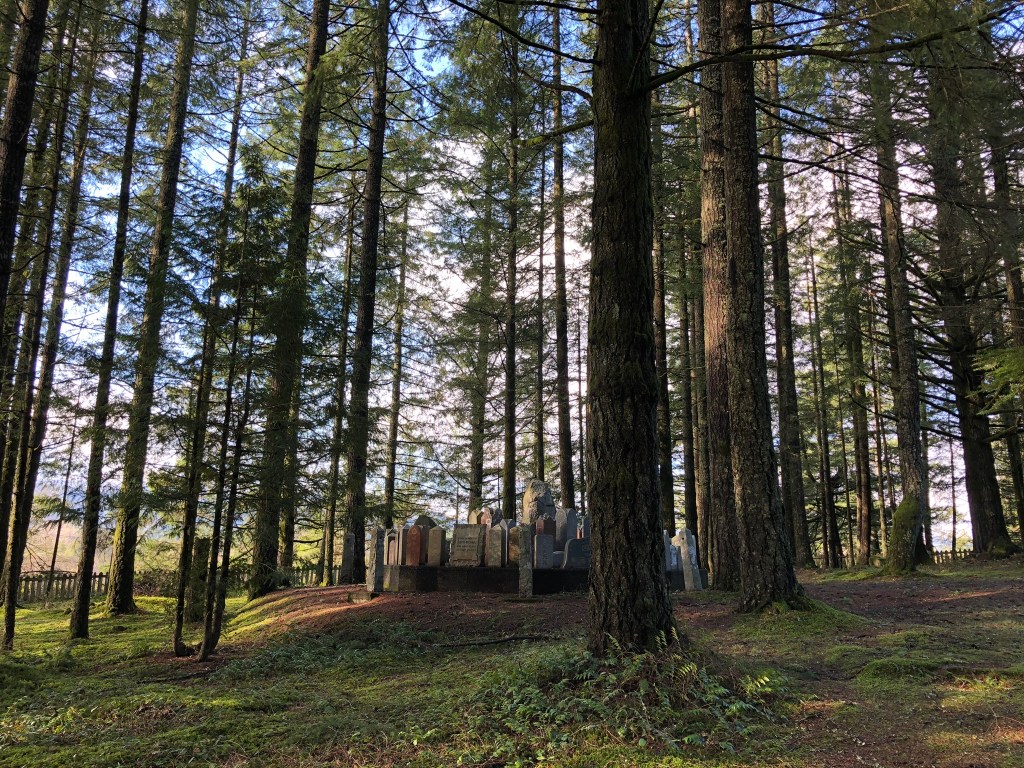
Beyond the memorial, the remnants of graves are barely distinguishable from the forest floor. Outlined by rectangular borders of stone or rotting wood, they are slowly surrendering to the carpet of springy, lustrous moss that cushions and soundproofs my footsteps. Simple paths of worn moss wind through the trees, with patches of salal and small shrubs flourishing at their base. Growing from the ruins of a grave, a tree as straight and wide as the white fence boards encircling the cemetery provides a sense of renewal, of life in death.
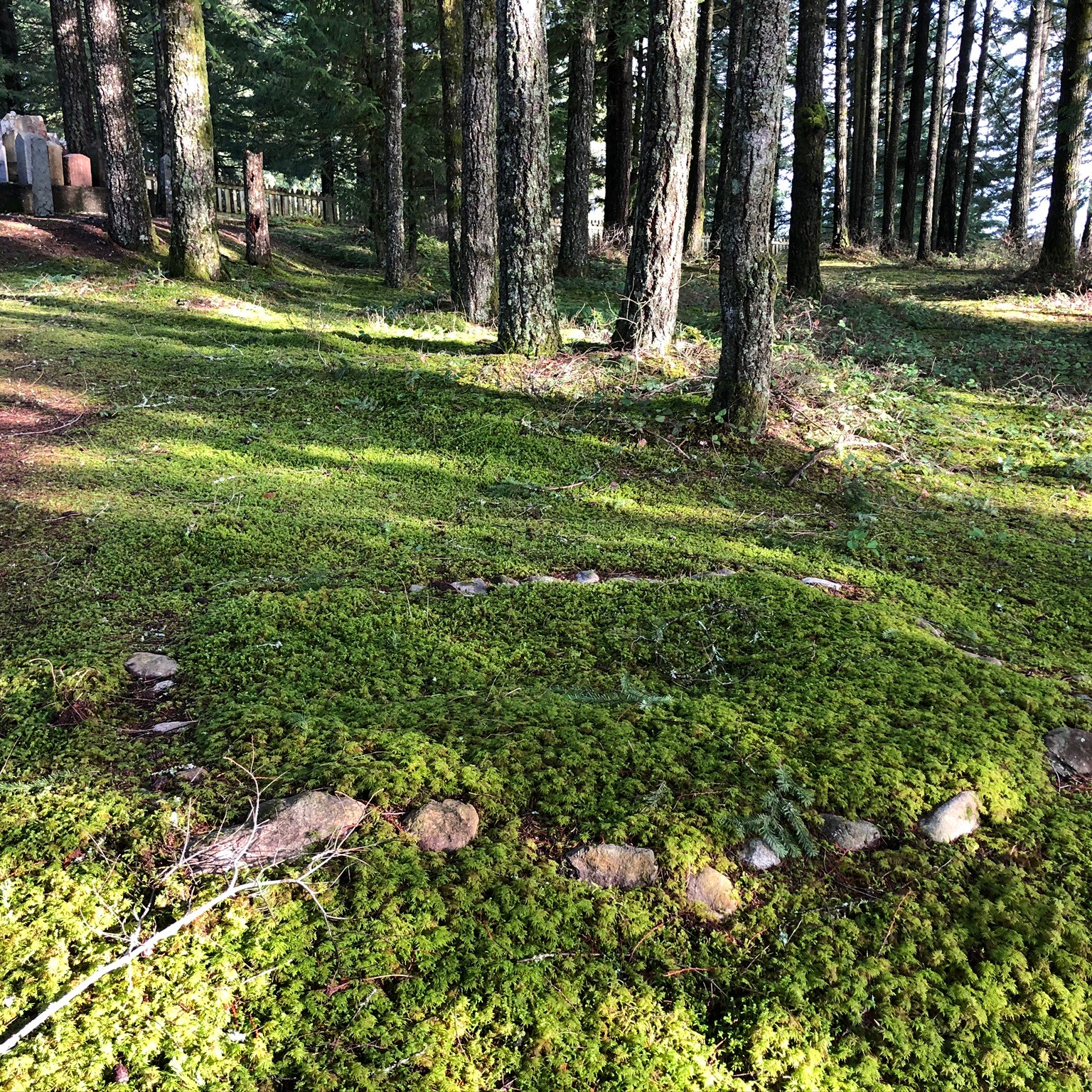
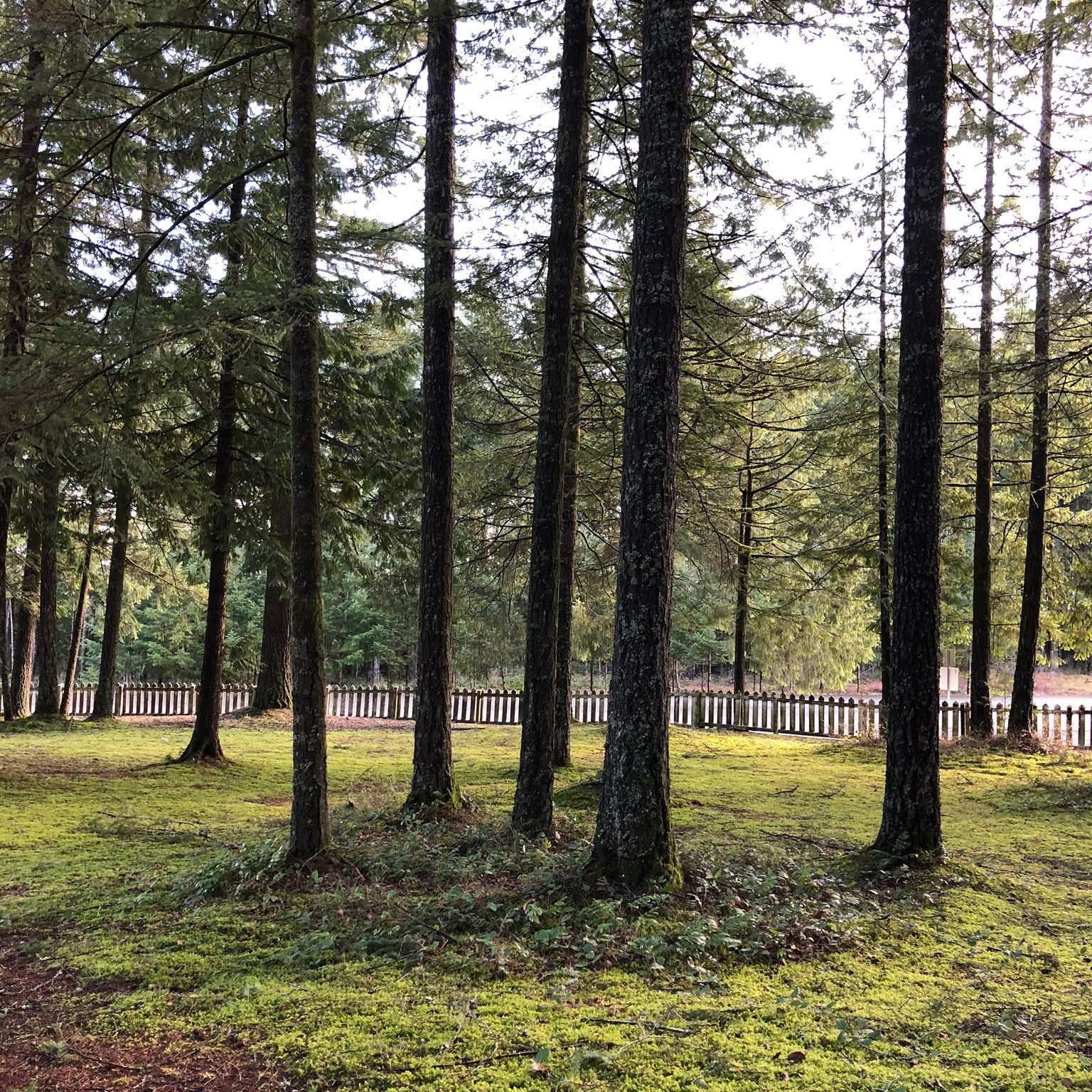
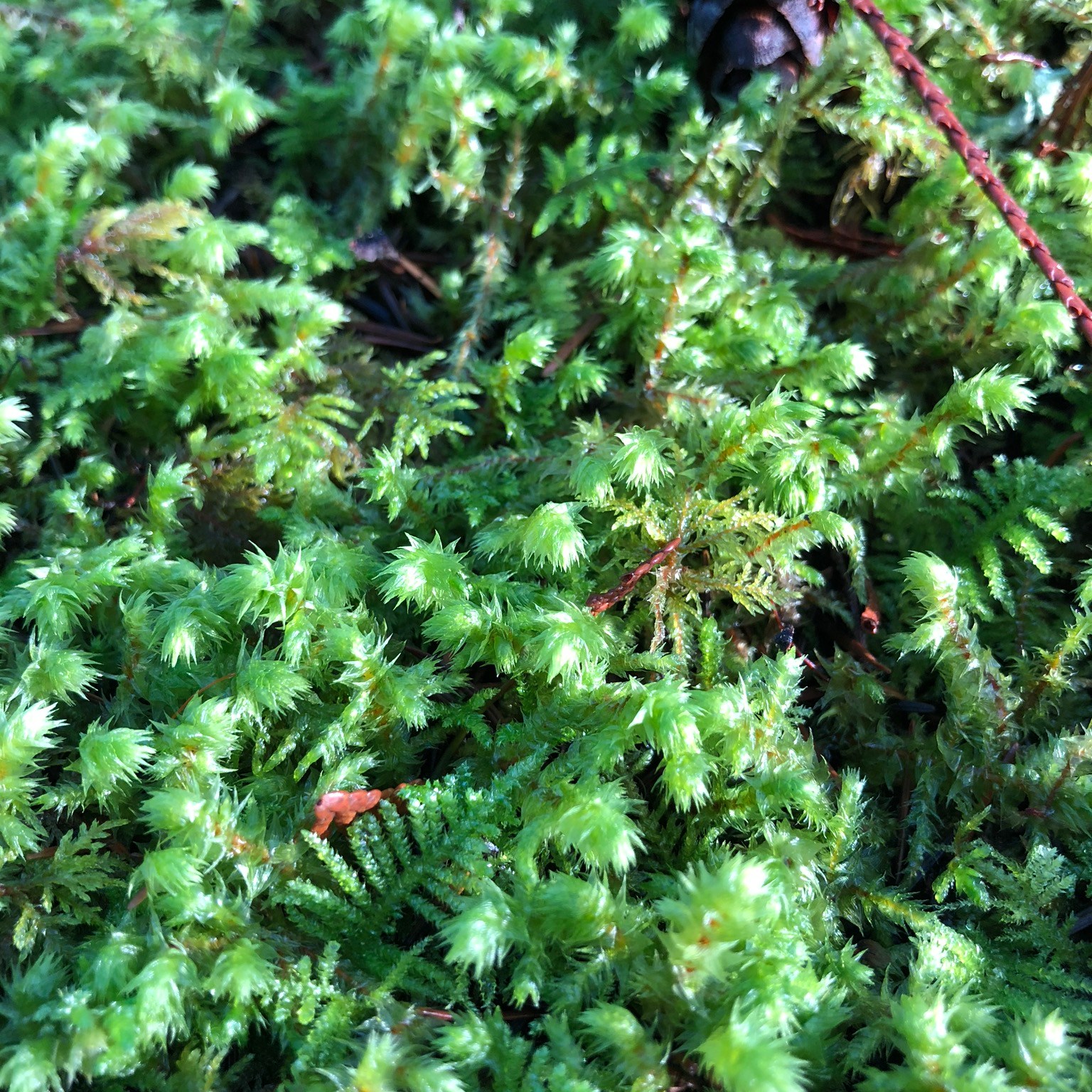
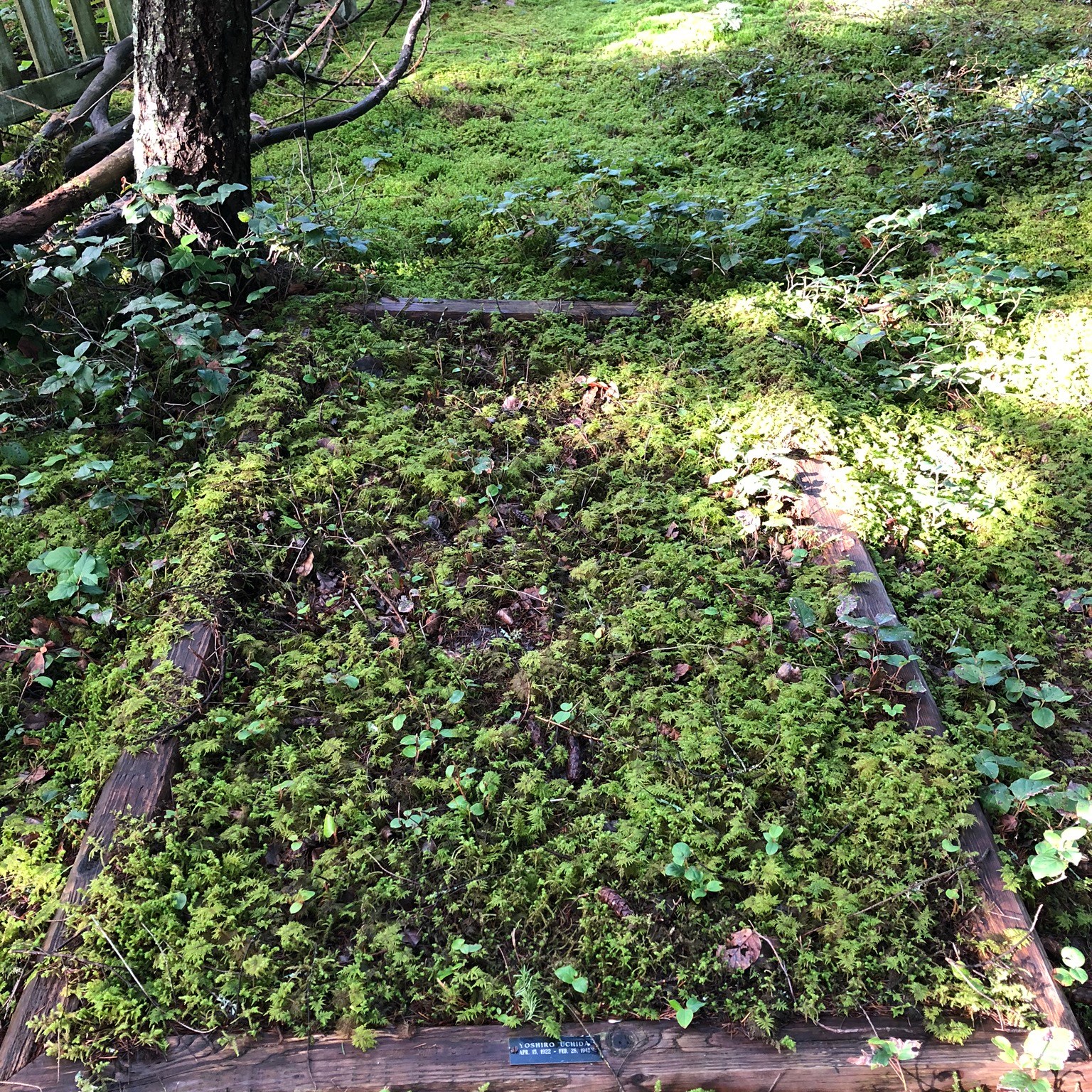
Time has slowly enshrouded the cemetery, the scattering of stones and blanket of moss visually softening its destruction, just as time has diluted the impact of a shameful episode in Canada’s history. Despite a disrespectfully discarded can of Lucky Lager evoking past transgressions, a sense of serenity and reverence prevails.
 I Wonder and Wander
Thank you for this poignant tribute, delivered in beautiful prose to honour this ancestral heritage cemetery. My maternal grandparents and their young son (my uncle) are buried there. I visited this site many years ago when visiting B.C. from Ontario where I reside. I considered it a pilgrimage as it was a long awaited visit I needed to make. I have a cousin in Vancouver who visits this cemetery annually; however as we all age, we wonder if anyone will continue to visit in the future. The background information and kind sentiments you provided to enlighten readers re the wartime Japanese Canadian experience is much appreciated.
LikeLike
Thank you for your kind words. I am glad to hear that there are descendants like you and your cousin who feel a strong ancestral connection to this beautiful cemetery. I hope the history of the vibrant Japanese community in Cumberland and the manner of its abrupt and sad demise are not forgotten.
LikeLike
Thank you Pauline.
Just an added comment about the cemetery. My cousin visited lat year and was concerned about maintenance issues re the perimeter fencing which appeared to be in disrepair. We weren’t sure who was responsible for the upkeep of these grounds but we notified our B.C. Japanese Association to ensure this cemetery isn’t forgotten.,
Jenny
LikeLiked by 1 person
Jenny, I wanted to share an update with you. Today I was talking about the cemetery with a Japanese-Canadian friend of mine. She told me that she is part of a group in the local Japanese community that goes to the cemetery once a year and cleans the grave stones. They also often have a priest come with them to say a prayer. She told me that she visited the cemetery recently and noticed that the gate had been repaired and there were some other improvements. This information on the website of the Village of Cumberland is also very encouraging https://cumberland.ca/japanese-cemetery/.
LikeLike